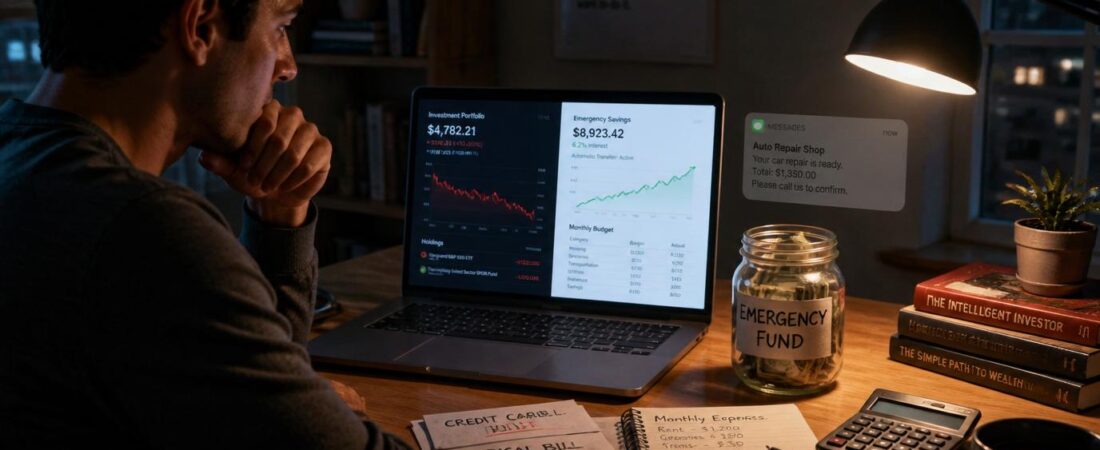
savings before investing
Emergency Fund Explained Why You Need It Before Investing
Investing feels exciting until real life interrupts it
When I first became serious about improving my finances, I wanted to invest immediately.
Investing felt productive. Sophisticated. Forward moving.
Saving cash felt boring.
So I focused almost entirely on growing investments while keeping very little money available for emergencies. At the time, it seemed logical. Why let money sit idle when it could grow?
Then real life happened.
Unexpected expenses appeared almost at the same time:
- a medical bill
- urgent car repairs
- reduced work income during a stressful month
Suddenly I was forced to pull money out of investments at the worst possible moment.
That experience taught me something most beginners underestimate.
Financial stability matters before financial growth.
That is the real purpose of an emergency fund.
An emergency fund protects you from financial panic
Most people think emergency funds exist only for massive disasters.
Usually they are needed for ordinary life disruptions:
- job interruptions
- medical expenses
- urgent travel
- home repairs
- car problems
- temporary income instability
Without emergency savings, every unexpected expense becomes emotionally intense.
People often respond by:
- using credit cards
- taking on debt
- selling investments early
- skipping important expenses
- entering survival mode financially
Emergency funds reduce panic because they create breathing room.
That psychological effect matters almost as much as the money itself.
Investing without emergency savings creates fragility
This is one of the biggest mistakes beginners make.
They rush into:
- stocks
- crypto
- ETFs
- options trading
- aggressive investing
before building financial stability first.
The problem is not investing itself. The problem is liquidity.
Investments fluctuate. Emergencies do not wait for good market timing.
If you are forced to withdraw investments during a downturn because you lack cash reserves, long term wealth building becomes much harder.
Emergency funds protect investments from being destroyed by short term problems.
Why cash savings feel psychologically uncomfortable
A lot of people resist building emergency funds because cash feels “unproductive.”
Compared to investing:
- savings accounts feel slow
- returns feel small
- growth feels invisible
But emergency funds are not designed for maximum growth.
They are designed for stability and access.
That distinction matters.
The purpose of emergency savings is not maximizing returns. It is preventing financial collapse during unstable periods.
Most financial stress comes from lack of margin
One thing I noticed repeatedly in financially stressed households is lack of margin.
Every dollar already has a job:
- rent
- debt
- groceries
- subscriptions
- insurance
- minimum payments
When unexpected costs appear, there is nowhere for the pressure to go.
That creates constant low level anxiety even during normal months.
Emergency funds create financial margin.
And margin changes how life feels psychologically.
How much emergency savings do you actually need
The standard advice is usually:
- three to six months of essential expenses
That is a reasonable target for many people.
But beginners often make the mistake of focusing on the final number immediately. That can feel overwhelming and discouraging.
Instead, focus on stages.
Stage 1
Build your first small emergency buffer:
- 500 dollars
- 1000 dollars
- one month of essentials
That alone reduces financial pressure dramatically.
Stage 2
Expand gradually toward larger reserves over time.
Progress matters more than immediate perfection.
Where should emergency funds be stored
Emergency savings should prioritize:
- accessibility
- stability
- low risk
Most people use:
- high yield savings accounts
- money market accounts
- separate savings accounts isolated from daily spending
This money is not supposed to generate aggressive returns.
It is supposed to remain available when life becomes unstable.
Emergency funds improve investing behavior
This part surprised me personally.
Once I built emergency savings, my investing behavior improved dramatically.
I stopped:
- panic selling
- obsessively checking markets
- fearing temporary volatility
Because I knew short term emergencies would not force me to touch investments immediately.
That emotional stability improves long term investing decisions significantly.
People underestimate how much financial behavior is connected to stress reduction.
Emergency savings create freedom quietly
Emergency funds rarely feel exciting.
Nobody posts savings account balances online for social validation.
But financially, they are one of the strongest foundations you can build.
Emergency savings create:
- flexibility
- reduced panic
- negotiation power
- career freedom
- emotional stability
That is real financial strength.
Not flashy investing screenshots.
The order matters more than people think
Many people want investing to solve financial insecurity immediately.
But without stability underneath, investing alone cannot create real financial control.
The sequence matters:
- stabilize
- reduce fragility
- build emergency savings
- invest consistently afterward
Skipping the foundation stage creates unnecessary risk.
That lesson becomes obvious only after life interrupts your financial plans unexpectedly.
Key Facts
- Emergency funds reduce financial panic during unexpected events
- Investing without savings creates financial fragility
- Cash reserves protect investments from forced liquidation
- Most emergencies are ordinary life disruptions, not disasters
- Financial stress often comes from lack of margin
- Small emergency funds already improve stability significantly
- Emergency savings improve emotional investing behavior
- Stability matters before aggressive wealth growth
FAQ
Why should I build an emergency fund before investing
Because emergency savings prevent you from selling investments or using debt during unexpected financial problems.
How much emergency savings should I have
Most recommendations suggest three to six months of essential expenses, but even smaller buffers help significantly.
Where should emergency funds be stored
Usually in high yield savings accounts or other low risk easily accessible accounts.
Is investing more important than saving cash
Long term investing matters, but financial stability should come first to reduce fragility.
Can emergency funds reduce financial stress
Yes. Having accessible cash reserves reduces anxiety and improves financial decision making.
Sources and Citations
Consumer Financial Protection Bureau Emergency Savings Guide
https://www.consumerfinance.gov/
Federal Reserve Household Financial Stability Reports
https://www.federalreserve.gov/
Investopedia Emergency Fund Basics
https://www.investopedia.com/
Harvard Business Review Behavioral Finance Articles
https://hbr.org/
Psychology Today Financial Stress Research
https://www.psychologytoday.com/