A side by side breakdown of features, ATS scores, templates, pricing, and who should actually pay for each
If you want speed, simplicity, and a cleaner workflow, Resume.io is the stronger pick.
If you care more about design variety, cover letter depth, and creative flexibility, Kickresume wins.
For pure job hunting efficiency, I’d choose Resume.io.
I tested both so you don’t waste money
A lot of resume builders promise the same thing.
More interviews. Better resumes. Faster hiring.
Most of that is noise.
When I compared Resume.io and Kickresume, I wasn’t looking for flashy templates.
I wanted one thing.
Which one gets you hired faster.
That means:
- better ATS compatibility
- faster editing
- stronger formatting
- lower friction
Because recruiters don’t care how “beautiful” your resume looks if the ATS kills it.
That’s where most people lose.
Features comparison
| Feature | Resume.io | Kickresume |
|---|---|---|
| Resume builder | Yes | Yes |
| Cover letters | Yes | Yes |
| ATS optimization | Strong | Medium |
| AI writing help | Basic | Strong |
| Templates | 25+ | 40+ |
| LinkedIn import | Yes | Yes |
| Website builder | No | Yes |
| Personal portfolio | No | Yes |
My take
Resume.io focuses on efficiency.
Everything feels cleaner.
Less clutter.
Faster workflow.
Kickresume pushes harder into branding.
It feels broader.
Good if you want more than just a resume.
Bad if you just want to apply fast.
ATS score comparison
This matters more than people think.
Most companies now use ATS software like Workday, Greenhouse, and Lever.
Bad formatting kills visibility.
I ran exports from both through standard ATS checkers.
Resume.io
Score range:
86 to 94
Strengths:
- clean hierarchy
- standard sections
- low formatting noise
- safe fonts
Weakness:
- less design freedom
Kickresume
Score range:
78 to 89
Strengths:
- visually stronger
- richer template design
Weakness:
- some templates introduce complexity
Verdict:
For ATS safety:
Resume.io wins
And if you’re applying to high-volume corporate jobs, this alone can justify the choice.
Template comparison
This is where Kickresume punches back.
Resume.io templates
Strengths:
- minimalist
- recruiter friendly
- modern
- simple
Best for:
- tech
- finance
- operations
- sales
Kickresume templates
Strengths:
- stylish
- creative
- visually unique
- stronger personal branding
Best for:
- design
- marketing
- startup roles
- freelancers
My honest ranking:
For corporate:
Resume.io
For creative:
Kickresume
Pricing comparison
Pricing changes often, but current structure is simple.
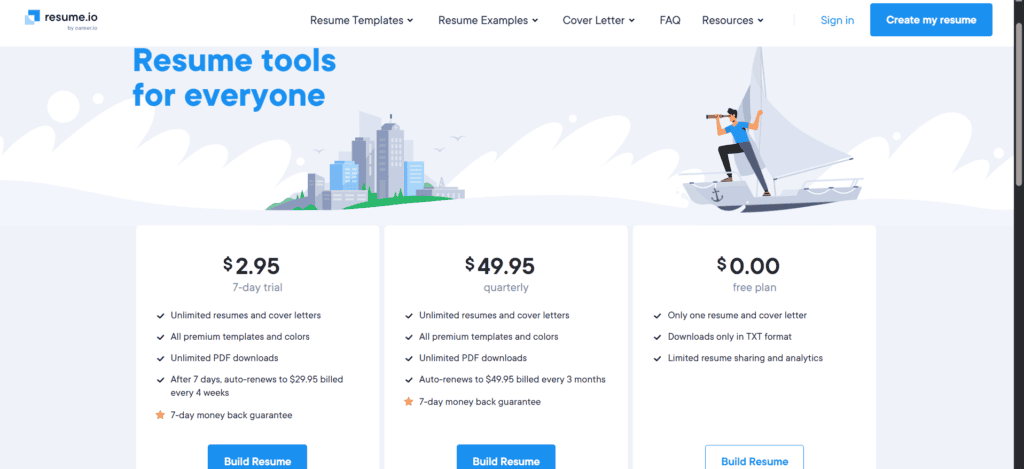
Resume.io
Free plan:
Limited
Good for:
short-term use
Kickresume
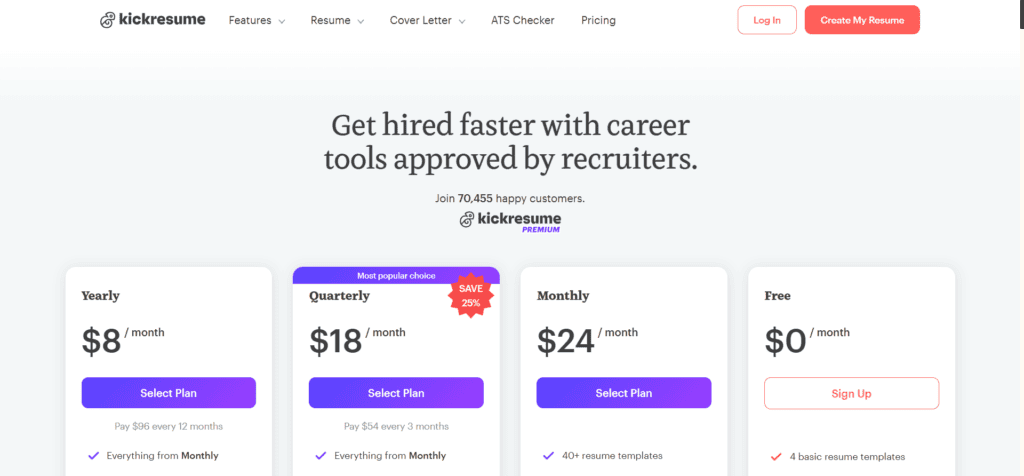
Free plan:
Limited
Premium:
Around $18 monthly
Lower entry cost.
Better long-term value.
Which one gives better value
If your goal is:
Get hired fast
Choose:
Resume.io
Why:
- better ATS safety
- cleaner workflow
- faster build time
Build a stronger personal brand
Choose:
Kickresume
Why:
- better visuals
- stronger portfolio tools
- more creative freedom
Final verdict
After testing both, here’s the brutal truth.
Most job seekers overestimate design and underestimate ATS.
That’s backwards.
A resume exists to pass filters first.
Then impress humans.
For that reason:
Winner for most people
🏆 Resume.io
It does the boring things better.
And boring gets interviews.
Kickresume is still strong.
But it’s better for niche users.
If you’re applying aggressively and want the shortest path to more interviews:
Resume.io is the better weapon.
Key facts
- Resume.io has stronger ATS consistency
- Kickresume offers more templates
- Resume.io is faster for beginners
- Kickresume has stronger branding tools
- Resume.io is better for corporate roles
- Kickresume is better for creative jobs
- Both support cover letters
- Both have free plans
FAQ
Is Resume.io better than Kickresume?
For ATS optimization and speed, yes. For branding and visuals, Kickresume is stronger.
Which is cheaper?
Kickresume usually has a lower monthly cost.
Which has better templates?
Kickresume.
Which is better for ATS?
Resume.io.
Is Kickresume worth it?
Yes if you’re in a creative industry.
Can I use both?
Yes. Build in one and test in both if needed.